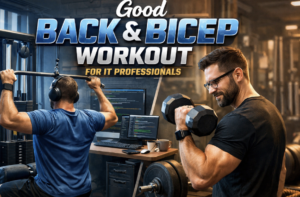
If you work in IT, your brain is doing heavy lifting all day. You are solving problems, tracking details, managing systems, and staying on top of fast-moving changes across infrastructure, cybersecurity, AI, and support. That kind of work demands stamina, focus, and consistency. It also usually comes with long hours sitting, leaning forward, and carrying tension through the neck, shoulders, and upper back.
That is exactly why a smart back and bicep workout matters for IT professionals. This is not about bodybuilding for the mirror. It is about building a stronger frame for the work you already do. A stronger back helps posture, supports your shoulders, and can make long desk days feel less draining. Strong biceps support pulling strength, grip, and arm endurance, which helps with everything from training sessions to daily movement outside work.
On top of your training, staying sharp in tech also means staying informed. If you like keeping a pulse on the industry, these are strong sources to keep in your rotation: Reuters Technology, AP News Technology, TechCrunch Cybersecurity, Ars Technica, The Verge AI, WIRED Security, CISA Cybersecurity Advisories, and Wikipedia’s Information Technology page.
Why Back and Biceps Are a Great Fit for IT Professionals
A lot of IT work pulls your body into a forward posture. Shoulders round in. Head shifts forward. Upper back gets tight. Over time, that can leave you feeling stiff and worn out even if your day was mostly spent at a desk.
Training back and biceps helps balance that pattern. Back exercises train the muscles that pull your shoulders back and support your spine. Rows, pulldowns, and pull variations build strength through the lats, rhomboids, rear delts, and mid-back. Bicep work adds arm strength and supports many pulling movements. Together, this combination can improve posture, reduce the “desk cave” feeling, and make your upper body feel more stable.
It also fits well into a busy schedule. A focused back and bicep session can be done in 45 to 60 minutes and gives you a lot of return for your time. If your workdays are packed with alerts, tickets, and meetings, efficient training matters.
How This Workout Supports Health and Long-Term Performance
This kind of workout is not just for aesthetics. It supports overall health. The CDC recommends adults get at least 150 minutes of moderate activity per week and at least 2 days of muscle-strengthening activity, and major muscle groups should be included. That makes a back and bicep day a strong part of a weekly routine.
The American Heart Association also emphasizes moving more and sitting less, which is especially important for desk-based careers. Even if your work is mentally intense, your body still needs regular movement and strength training to stay resilient.
For IT professionals, that matters because your job performance depends on consistency. You need energy, attention, and patience. Regular training can help you feel more capable physically, which often carries over into how you handle stress and long workloads.
Before You Start: A Simple Warm-Up That Works
Do not skip the warm-up. It makes your workout feel better and helps your pulling movements look cleaner.
Start with 5 to 8 minutes of light movement. A brisk walk, bike, or rower works well. Then do a short upper-body mobility series:
-
Arm circles forward and backward
-
Band pull-aparts
-
Scapular wall slides
-
Light face pulls
-
Bodyweight hinge pattern or light dumbbell Romanian deadlift reps
The goal is to wake up your shoulders, upper back, and grip without fatigue. You want your first working set to feel smooth, not stiff.
The Back and Bicep Workout for IT Professionals
This workout is built to be practical, repeatable, and effective. It uses simple movements that most gyms have equipment for. If you train at home, many of these can be done with dumbbells and resistance bands.
1) Lat Pulldown or Assisted Pull-Up — 4 sets of 8 to 12 reps
This is your vertical pull and a great way to train the lats. Focus on pulling your elbows down toward your sides instead of yanking with your hands. Keep your chest lifted and avoid leaning way back.
Move with control. Pause briefly at the bottom. Let the bar rise slowly.
If you are doing assisted pull-ups, use a steady tempo and get a full stretch at the bottom.
2) Seated Cable Row or Chest-Supported Row — 4 sets of 8 to 12 reps
This is a key movement for posture support. Rows train the mid-back and help counter all the forward-leaning desk time.
Think about squeezing your shoulder blades together without shrugging. Keep your torso still and let your arms follow your back, not the other way around.
Chest-supported rows are especially good for IT professionals because they reduce lower-back strain and make it easier to stay strict.
3) One-Arm Dumbbell Row — 3 sets of 10 reps each side
This movement helps fix side-to-side strength imbalances and gives you a bigger range of motion. Place one hand on a bench, keep your spine neutral, and pull the dumbbell toward your hip.
Do not twist your torso to finish the rep. Let your back do the work.
This exercise is excellent after long computer sessions because it reinforces strong pulling mechanics and shoulder stability.
4) Face Pulls or Rear Delt Cable Pulls — 3 sets of 12 to 15 reps
This is one of the best support exercises for people who spend hours at a screen. It hits the rear shoulders and upper back while encouraging better shoulder position.
Pull toward your face with elbows high, then control the return. Keep the movement smooth. This is not a heavy ego lift. It is a quality movement that pays off over time.
Your shoulders will thank you for this one. 🔥
5) Dumbbell Hammer Curls — 3 sets of 10 to 12 reps
Hammer curls build the biceps and forearms, which is useful if you deal with a lot of typing, mousing, and general arm fatigue. The neutral grip is also usually comfortable on the wrists and elbows.
Stand tall and keep your elbows close to your sides. Do not swing the weight. A slow lowering phase makes these much more effective.
6) EZ-Bar Curl or Cable Curl — 3 sets of 8 to 12 reps
This is your main bicep-focused movement. Pick the version that feels best on your wrists. EZ-bar curls often feel more natural than a straight bar.
Lift with control, squeeze at the top, and lower fully. Keep tension on the biceps the whole time.
This is where you can chase a good pump while still staying strict. 💪
7) Finisher: Farmer Carry or Dead Hang — 2 to 3 rounds
For a practical finisher, choose one:
-
Farmer carry for 30 to 45 seconds
-
Dead hang for 20 to 40 seconds
Farmer carries build grip, upper-back stability, and core strength. Dead hangs help decompress the shoulders and improve grip endurance.
Both are great for IT professionals because they train the “support muscles” that often get ignored but make a huge difference in how your body feels during workdays.
How to Schedule This Workout During a Busy IT Week
The best workout is the one you can repeat. You do not need a perfect schedule. You need a realistic one.
A simple weekly setup could look like this:
-
Day 1: Back and biceps
-
Day 2: Walk or light cardio
-
Day 3: Legs
-
Day 4: Rest or mobility
-
Day 5: Chest, shoulders, triceps
-
Day 6: Walk, bike, or full-body circuit
-
Day 7: Rest
If your schedule is chaotic, keep your back and bicep day as a priority anchor. It is one of the most useful sessions you can do when you spend long hours at a desk.
Form and Recovery Tips That Matter More Than Extra Weight
A lot of people train back poorly because they move too fast and let their arms take over. If you slow down and feel the back muscles working, your results will improve quickly.
Keep these basics in mind:
-
Pull with your elbows, not just your hands
-
Keep your ribs down and chest proud
-
Do not jerk the weight
-
Use a full range of motion
-
Stop 1 to 2 reps before sloppy form starts
Recovery matters too. Sleep, hydration, and regular movement during the workday all make a difference. Stand up between tasks. Walk during calls when possible. Stretch your chest and shoulders for a minute or two. Small habits add up.
The World Health Organization also supports regular weekly activity plus muscle-strengthening work on 2 or more days, which lines up well with a structured strength routine like this.
Progression for IT Professionals Who Want Results Without Burnout
You do not need to crush yourself to make progress. You need consistency and progression.
Use this simple progression method:
-
Start with a weight you can control for the target reps
-
When you can hit the top of the rep range on all sets, increase the weight slightly next session
-
If stress or sleep is rough that week, keep the same weight and just focus on form
That approach works extremely well for professionals with demanding mental workloads. It gives you structure without pressure and keeps training sustainable.
Think like an IT pro here: stable systems beat chaotic systems. Your workout plan should feel the same way. 📈
Conclusion
A good back and bicep workout is one of the smartest training choices for IT professionals. It helps build posture, strength, and physical resilience for a career that demands long hours of focus and problem-solving. It also gives you a practical way to balance out the desk posture that can wear your body down over time.
You do not need anything fancy. You need clean pulling movements, consistent effort, and a routine you can stick with. Train your back to support your work. Train your arms to support your strength. Keep it simple, stay consistent, and let the results build week by week.
That combination of strength, structure, and consistency is a powerful edge in IT and in life. 🚀